

Skincare Parabens: What, why and why so many are moving away from them
We are now becoming a generation of people that values transparency and wellness. We are a lot more conscious with regard to skincare products. And for many, it is just as important to know that skincare products are safe, not only for their bodies but for the environment as well. Online information is readily available today, giving us access to so much research and different findings. There are also apps and reviews for almost everything; it is easy to go down a rabbit hole on the latest dos and don’ts with regard to skincare. Because of this, the demand for transparency and more chemical-free or ‘clean’ skincare is growing fast. We are realising that there was a lot that we didn’t know about, like parabens.
Have you ever picked up a skincare product, read the ingredients list on the back and seen the word paraben? Or maybe, you have noticed a label on the front of a product stating that this product is paraben-free. Yes? But what are the parabens? Why are they included in the majority of our skincare products? And do we have a reason to worry about them? Let’s break it down.
What Are Parabens?
Parabens are synthetic preservatives that are usually used in skincare and personal care products. They are mainly used to prevent bacteria, mould and yeast growth in formulas. They preserve our products and increase their shelf life so that we can use them for a longer period of time.
They were first used in the beauty industry in the 1950s and were at one time regarded as the gold standard of preservation because of their effectiveness and low cost. They are typically applied in products which have water e.g. moisturisers, cleansers, lotions, shampoos, and makeup.
What Do Parabens Do in Skincare Products?
As we said earlier, parabens increase the product shelf life and stop bacteria and mould from growing on our products. To remove these preservatives would mean we would end up wasting a lot of our products, because they would spoil a lot faster than we could finish them. Especially when kept in damp or wet rooms such as a bathroom. We see then that the use of preservatives is warranted for the safety and preservation of our skincare products. Nevertheless, it is not what parabens are doing to products but more a question of what they can do to our bodies.
The potential effects of the parabens on the skin and the overall health.
Parabens have become controversial in recent years, as studies have now discovered that parabens mimic estrogen which is an endogenous hormone in the body. Consequently, they are considered as potential endocrine disruptors, i.e., they can affect the hormonal balance.
Potential Skin Effects
· May cause skin irritation such as eczema or other forms of skin reactions, especially in sensitive skin
· The skin barrier is damaged over time
· Some experience more skin inflammation and breakouts.
Potential Health Concerns
Studies have detected parabens in human blood, urine and even breast tissue. Research is still underway, but these findings have raised concerns that the use of parabens are potentially associated with:
• Hormonal imbalance
• Reproductive health issues
• Early puberty
• Higher risk of hormone-related disorders
It must be added that the regulation agencies for skincare products permit the use of parabens in low dosages. Nevertheless, precautions are being taken by many consumers, particularly Gen Z, who have decided to avoid them altogether.
Toxic Parabens to Watch Out for Packages
All parabens are not created equally. Some parabens are considered to be more toxic than others due to the level of estrogen-mimicking effects.
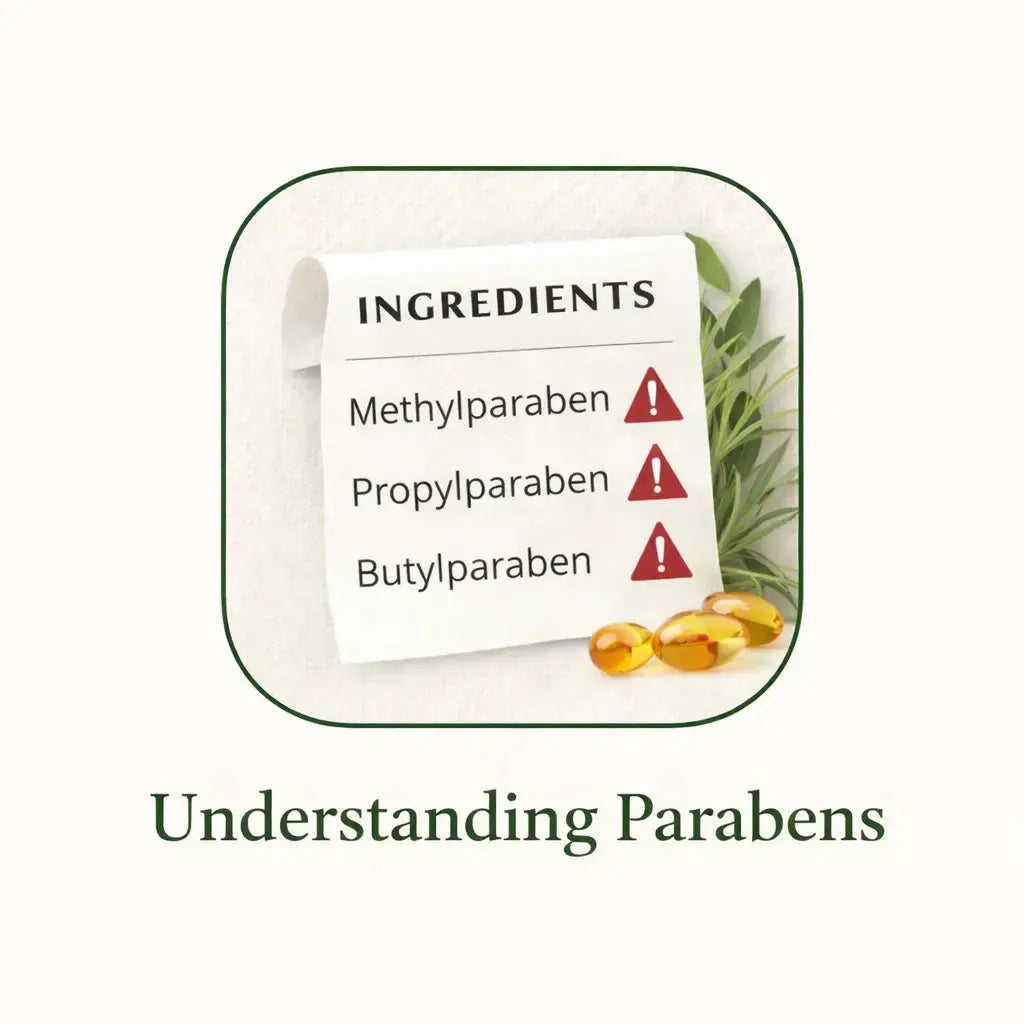
The list below are some of the more toxic parabens commonly used in skincare ingredients:
• Methylparaben
• Ethylparaben
• Propylparaben
• Butylparaben
• Isobutylparaben
• Isopropylparaben
When checking your skincare ingredients list, a simple rule of thumb is if it has the word 'paraben' at the end, it belongs to this family.
Safer, Non-toxic Paraben Alternatives
The good news is that, due to an increased awareness of paraben toxicity, science has improved. There is now a greater selection of non-toxic preservatives available to us. These preservatives are gentler and healthier for the body and align more with this generation’s values.
The following are some of the safer alternatives:
Substitutes of Natural and Low-Toxicity Preservatives
• Phenoxyethanol (when used at safe concentrations)
• Sodium benzoate
• Potassium sorbate
• Benzyl alcohol (plant-based, does not dry when used correctly)
• Gluconolactone
• Ethylhexylglycerin
Plant-Based Preservation alternatives
Many clean beauty, sensitive skin and wellness-first brands use ingredients like botanical extracts, organic acids and fermented ingredients for natural protection for their products that are also kind to the skin and health.
The Importance of this to this generation
This generation are buying values; they are not only interested in glowing up but also ingredient transparency. Long-term health. Sustainability and brands that respect their bodies and our planet. It is not a question of fear, but the principle of making a responsible and informed decision not to use parabens. It is choosing to use products that feed and improve the skin without exposing it to unnecessary chemicals. And matching their beauty practices with a more holistic attitude towards health.
The Bottom Line
The use of parabens has been significant in the preservation of skincare products over the years. However, consumer awareness has forced the industry to focus on safer and cleaner products. You knowing what ingredients to avoid by reading the labels will help you to stay in control of what you put on your skin. Because what you put on your skin will go into your pores, and what goes into your pores will go into your bloodstream.
Beauty does not always have to be expensive to your health. #Beauty Beyond Chemicals🌿
Comments